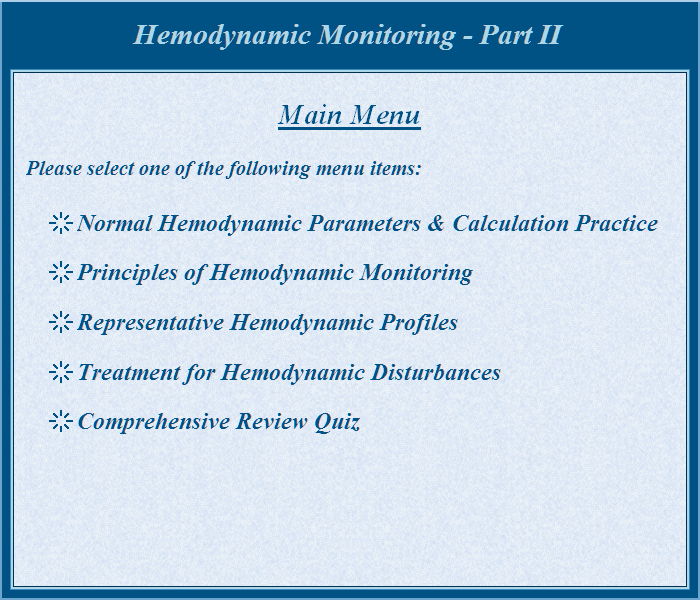
Principles of Hemodynamic Monitoring: The Principles of Hemodynamic Monitoring section presents an overview of the factors that affect the regulation of blood flow and cardiac output heart rate and stroke volume. This section also defines and describes preload, contractility, and afterload.
Representative Hemodynamic Profiles: The Representative Hemodynamic Profiles section presents a summary of 15 major disease states and their representative hemodynamic profiles. Included in this section are: Acute Cardiac Tamponade/Hypovolemic Shock/Congestive Heart Failure-Pulmonary Edema/Acute Myocardial Infarction/Left Ventricular Failure/Septic Shock/Adult Respiratory Distress Syndrome/Neurogenic Shock/Cardiogenic Shock/Anaphylactic Shock/Pulmonary Emboli/ Chronic Obstructive Pulmonary Disease/Pulmonary Hypertension/Right Ventricular Failure/Hypervolemia.
Treatment for Hemodynamic Disturbances: The Treatment for Hemodynamic Disturbances section includes the terminology associated with cardiovascular pharmacology as well as the principles involved in treating hemodynamic abnormalities. Cardiovascular agents that alter cardiac output, arterial blood pressure, myocardial contractility, preload, afterload, heart rate, and SVR are given a detailed presentation. This section concludes with a graphic summary of therapeutic interventions designed to correct hemodynamic disturbances.
Comprehensive Review Quiz: The Comprehensive Review Quiz contains a test bank of 100 test questions obtained from all sections of hemodynamic Monitoring - Part II. The test questions are generated in a randomized fashion and feedback is given for correct choices as well as incorrect choices. The user has the option of printing a score report after completing the quiz.

|

|
Copyright © 1995 - 2020, C&S Solutions. All rights reserved.
All software is copyright and protected under U.S. Copyright Law. Text, graphics, animations, audio, and video content of each software program may not be reproduced or transmitted in any form or by any means, electronic or mechanical, including photocopying, recording, or any information storage and retrieval system, without specific permission in writing from C&S Solutions.
